
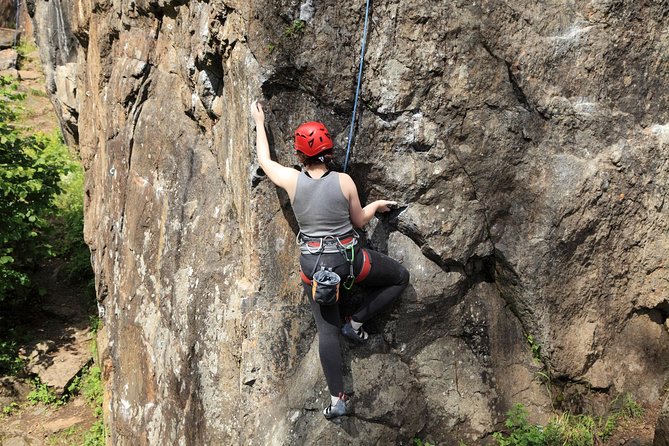
REVIEW · SEATTLE SEA KAYAKING & RAFTING
Intro to Outdoor Rock climbing
Climb outdoors, learn safety, repeat, in one day. This full-day intro to outdoor rock climbing takes you from gear basics to real outdoor top-rope practice, with a short hike to a natural cliff face and plenty of time on the wall. What makes it especially appealing is the small group format (up to 6) and the focus on belaying you can use immediately.
I really like that you learn the “do it for real” basics, like knots, climbing commands, and how to belay and catch a fall, not just watch from the ground. You also get instruction on common systems and devices, including ATC and auto-locking belay devices, plus ethics for crag behavior. One consideration: you should be comfortable with a moderate level of fitness for climbing plus a hike, and transportation and meals are not included.
Key points before you go
- Up to 6 people means you get hands-on feedback instead of waiting your turn
- Top-rope on at least 5-6 routes outdoors so you actually build comfort on different rock features
- Belay test focused skills with practice on knots, commands, and catching a fall
- Gear basics start day one covering harness, helmet, biners, belay devices, rope, shoes, and chalk bag options
- Crag ethics and safety concerns are treated as part of the day, not an afterthought
- Professional instruction and medical kit keep the experience grounded in safety
A one-day outdoor climbing class that teaches you how to belay
Seattle is a great place to learn rock climbing because the city sits close to real climbing areas. This intro course is built for beginners who want to move past the theory stage. You’ll start with the essential gear and safety ideas, then head to a natural cliff face for hands-on top-rope climbing.
The biggest value here is that you are not just “getting a try.” You work on fundamentals that transfer to other climbing settings, including an indoor gym belay test. That means once you’re home, you’re not starting from scratch when you try climbing again.
A typical day follows a steady pattern: meet with the crew, get gear basics and instruction, hike to the crag, review climbing safety and knots, then climb and belay through multiple routes. Since it runs about a full day and ends back at the meeting point, you can plan it like a single outing without stitching together lots of logistics.
Still deciding? These Seattle bookings are the ones travellers keep coming back to.



Your day starts at Miyar Adventures, Ballard, at 9:00 am
The meeting point is Miyar Adventures at 1120 NW Ballard Way, Seattle, WA 98107, with a 9:00 am start time. The operator provides a mobile ticket, and the course runs in English.
If you like structured mornings, this is a plus. You’ll have time in daylight to learn the system, practice knots and belaying, and still climb enough outdoor routes to feel real progress. If you prefer late starts, you’ll want to plan your sleep and travel the night before so you’re not rushing.
Since the end point is back at the meeting point, you’re not dealing with complicated drop-offs. One thing to keep in mind: transportation is not included, so you’ll want to arrange how you get to the start and how you handle any driving if the team adjusts the location based on conditions.
What you learn before you clip in: gear, knots, and commands
The course is built around the exact skills that make top-rope climbing safe and repeatable. You’ll cover understanding climbing gear, including harnesses and helmets (with rentals available), biners, rope, draws, and chalk bag options. You’ll also learn about belay devices, specifically ATC and auto-locking models, and how to use them as part of the system.
Then you move into the “hands on” portion: climbing knots and how to tie them. In a beginner class, knots can feel like a big mystery. Here, knots are treated as a core skill set, because they connect everything else: rope, anchors, and how the climb stays controlled.
You also learn climbing commands, which matters more than it sounds. Good commands reduce confusion at the belay station, especially when you’re switching roles between climbing and belaying. If you’ve ever been around new climbers, you know how easy it is for the process to get messy without simple language.
The hike to the cliff face and how safety gets taught in context
Outdoor climbing is not just “indoor climbing with better views.” Crags have uneven ground, changing conditions, and real consequences for mistakes. This course tackles that by taking you out to a natural cliff face and teaching safety there, not just in a classroom.
You’ll discuss climbing safety and then start climbing and belaying. The guide also covers cragging area ethics and safety concerns. That is practical, because outdoor areas share space with other climbers, and behavior affects access and safety for everyone.
One of the smartest parts of this setup is that the learning happens where the decisions get made. Knots, anchor materials, and belay mechanics are explained and then used right away. That helps your brain connect steps in order, instead of memorizing them like a checklist.
Top-rope on 5 to 6 routes, with variety you can feel
A key promise of this class is that you’ll climb outdoors on at least five different top-rope routes, with the typical experience described as 5-6 routes. That variety is more than a numbers game. Different routes mean different holds, different rock textures, and different line choices.
You’ll learn basic technique for climbing rock faces and cracks. Even as a beginner, this matters because outdoor climbing rarely looks like the same kind of smooth, uniform holds you might see indoors. Cracks can feel intimidating at first, but learning the basics here helps you start building the right habits rather than forcing random moves.
What I like about the structure is the repetition with change. You climb, you belay, you reset, and you climb again. By the time you’re on later routes, the systems you learned earlier start to feel automatic, not like “that thing we talked about earlier.”
Another subtle win: practicing multiple routes gives you more chances to experience success. If a route feels awkward or you struggle with a particular section, you still have additional routes to build confidence.
Belaying practice: learn to catch a fall, not just hold the rope
Top-rope climbing depends on belaying. This course specifically teaches how to belay climbers and catch a fall, which is exactly the mindset you want before you ever climb on your own. You’ll also get to practice belaying, not only observe.
They work with real belay devices, including ATC and auto-locking options, and they teach the fundamentals of using them correctly. That’s important because devices can behave differently, and beginners deserve instruction that explains what to do and why.
Belay skills are also tied to learning climbing commands and safe communication. In a busy setting, you need simple, reliable signals, and the course builds that early. If you plan to keep climbing later, this part helps you avoid bad habits you might pick up from watching other people.
The course also aims at preparation for a belay test in an indoor climbing gym. I like this because it gives your outdoor practice a clear endpoint. You’re not only chasing the thrill of being on rock, you’re building the test-ready system that helps you keep progressing.
- Beneath The Streets Underground History Tour★ 4.5 · 8,006 reviews
- Chef Guided Food Tour of Pike Place Market★ 5.0 · 3,733 reviews
- Mt. Rainier National Park Highlights Tour★ 5.0 · 3,156 reviews
Knots and rope skills you’ll actually use again
Knots can be the boring part of some climbing lessons, but not here. The class includes climbing knots as a named skill area, and the day is paced so you can use them in context.
You also learn about rope and quick gear setups as part of the outdoor top-rope system. The operator provides materials for top-rope set-up, including ropes and anchor materials. That means you can focus on learning the correct process without worrying about assembling the whole system from scratch.
In a beginner course, it’s easy to think rope skills are optional. They are not. Even if you never tie knots again later (some people still practice for safety), understanding knots makes you a better climber because you understand what your system depends on.
Gear and rentals: what’s included versus what you need to arrange
Here’s where the course is refreshingly clear. Instruction by professional guides is included. They also provide materials for top-rope set-up, including ropes and anchor materials. You get group medical kit support and belay devices.
What is not included is also straightforward. You may need to rent:
- Harness (rentals available)
- Helmet (rentals available)
- Rock climbing shoes (rentals available)
A chalk bag with chalk is optional. Transportation, meals, snacks, and tips are not included. That matters because you should plan to eat and handle hydration on your schedule, plus budget time to get to the meeting point.
If you show up with your own harness and shoes, you might still benefit from the rental option if you’re not sure about fit. Good fit matters for climbing comfort, and beginners often underestimate that until they’re on route.
Who this course fits best, and who might want a second look
This experience is designed for beginners, and the stated goal is to help you learn the basics and pursue the sport. You’ll climb outdoors, learn knots and commands, practice belaying, and build technique for faces and cracks.
It also calls for moderate physical fitness level. That’s not about being strong. It’s about being able to hike to the cliff face, manage route climbs, and handle the movement of switching between climbing and belaying.
If you’re anxious about outdoors, this type of course is often a good fit because the instruction emphasizes safety and repeat practice. The guides are described as patient, and there’s an emphasis on helping you get over fear while still being careful.
If you want your day to be mostly about scenic views and no ropes, this likely won’t match your vibe. This is an active skills course.
Seattle weather and possible location changes, including Frenchman Coulee
Outdoor climbing depends on weather. Even if Seattle is the starting point, conditions can shift. One thing that comes up in real-world execution is that the team may adjust where you climb if the weather doesn’t cooperate, including heading to Frenchman Coulee when conditions allow.
That’s actually a plus if you’re flexible and want the instructor to make the call. The value of a good climbing day is getting to a cliff and climbing safely, even if that means driving east instead of staying close to the city.
Just keep in mind again that transportation is not included, so you should expect some kind of logistics plan tied to where you end up. Ask ahead if you’re booking with tight timing, especially if you’re coming from outside Seattle.
The instructor effect: patient coaching and safety-first teaching
The course is led by professional guides, and the biggest theme in the way people describe these instructors is clarity and patience. Names that have come up include Brett and Simon, and instructors like Glen and Sandeep have been credited with guiding beginners through everything from safety to the mental side of climbing.
What matters for you is the teaching approach. A beginner class needs someone who can explain belaying and knots in plain language and then stand close enough to correct your hand position or rope handling. When that support is there, you spend less time guessing and more time learning.
The day is also structured so you keep moving between skills and climbing. That pacing helps you stay engaged and not freeze up when it’s time to belay or tie in.
Value: why this course is a smart first step
There are two ways to start climbing: you can “try a thing,” or you can learn a system. This course is clearly aimed at the system route.
You’re paying for expert instruction, safety coaching, and real practice on outdoor top-rope routes. You’re not arranging anchor materials, ropes, or belay devices yourself. You’re also getting a sequence of skills that connect directly to indoor climbing progress, especially belay test readiness.
Even without seeing a price here, the value logic is strong. Inclusion of top-rope set-up materials, belay devices, and professional guidance is a big part of what makes the day work. For a beginner, that saves money and, more importantly, saves time and uncertainty.
When to book this outdoor climbing intro
Book it when you want:
- A fast, structured start in outdoor top-rope climbing
- Hands-on practice with belaying, knots, and commands
- Outdoor climbing confidence that transfers to an indoor gym belay test
- A small-group day with personal attention, up to 6 people
Consider a different option if:
- You can’t manage moderate physical activity for a hike plus climbing
- You’re not prepared to handle your own transportation and meals
- You’re looking for a low-effort sightseeing day rather than skills practice
If you’re the type who likes clear safety systems and measurable progress, this course is a solid fit.
Should you book this Seattle outdoor rock climbing course?
I think it’s a great choice if you want to learn the core skills in a single full day and you care about doing it safely. The course focuses on what actually keeps people secure: equipment knowledge, knots, climbing commands, and real belay practice on multiple routes.
If you’re ready for an active outdoor day, this is the kind of start that makes future climbing easier. Just plan for your moderate fitness needs, bring rental plans in mind for harness, helmet, and shoes, and handle meals and transportation on your own.
If you want a beginner-friendly path that leads somewhere, this one-day intro is built for that.
FAQ
How long is the outdoor rock climbing experience?
It runs for approximately 1 day, which is described as a full-day introduction.
Where is the meeting point, and what time does it start?
It starts at Miyar Adventures, 1120 NW Ballard Way, Seattle, WA 98107, at 9:00 am.
What languages are offered?
The tour is offered in English.
How many people are in each group?
The maximum group size is 6 travelers.
What climbing routes will I do?
You will climb at least five different outdoor top-rope routes, with the experience described as 5-6 routes.
What skills are covered during the day?
You learn climbing gear basics, draws, climbing knots, climbing commands, how to belay and catch a fall, basic technique for rock faces and cracks, crag ethics and safety concerns, and top-rope climbing.
What is included, and what rentals might I need?
Included are instruction, materials for top-rope set-up (ropes and anchor materials), a group medical kit, and belay devices. Harness, helmet, and rock climbing shoes are not included, but rentals are available.
What is the cancellation policy?
You can cancel for a full refund up to 24 hours before the start time. If you cancel less than 24 hours before, the amount paid is not refunded. The tour may also cancel if minimum passenger numbers are not met, with an alternative or full refund offered.
More Tour Reviews in Seattle



Newest on the Seattle desk
- Seattle: Twilight Tour and Olympic National Park
★ 5.0 · 3 reviews - Where the Hops Grow! Yakima Brewery Tour
★ 5.0 · 3 reviews - Forks Town, Twilight Movie, Olympic Small Group 1 Day Tour
★ 5.0 · 3 reviews - Tacoma & Gig Harbor Hotel Transportation To/From Seattle Airport
★ 5.0 · 3 reviews - Awesome Scavenger Hunt: Seattle By The Sound
★ 3.5 · 3 reviews
Seattle Sea Kayaking & Rafting, side by side.
 ★ 5.0Upper Skagit Introductory Whitewater Rafting TripFrom $115292 reviews
 ★ 5.0Waterfall Rappelling Canyoneering Adventure + Photo Package!From $32929 reviews
 ★ 5.0Guided Kayak Tour To Hope Island State ParkFrom $8910 reviews
 ★ 5.0West Seattle Sunset Sea Kayak TourFrom $1395 reviews
 ★ 5.0Elliott Bay Sea Kayak TourFrom $1394 reviews
 ★ 5.0Lake Union Kayak Tour – Small Groups, Big ViewsFrom $803 reviews
 ★ 5.0Alki Lighthouse Sea Kayak TourFrom $1493 reviews
Seattle pages with this tour