
REVIEW · SEATTLE MUSEUMS & ATTRACTION TICKETS
Museum of Illusions Seattle Admission Ticket
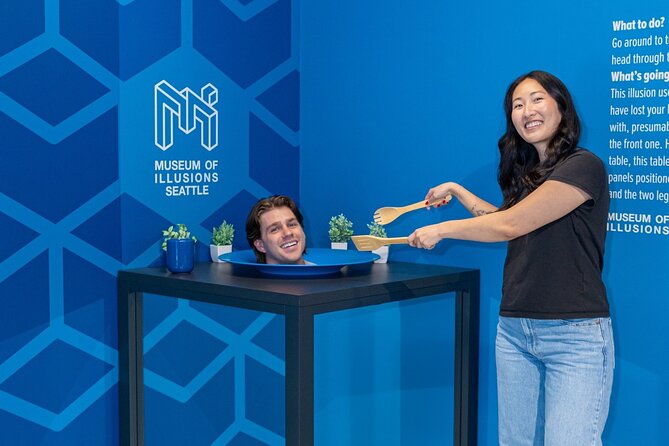
Your eyes will argue with reality here. The Museum of Illusions Seattle turns optical confusion into a hands-on, sensory lesson, using the science of how your brain interprets what you see. Expect illusion rooms, installations, and holograms that make the rules feel optional.
I like that it is hands-on from the start, not just something to watch from a distance. You get over 50 immersive exhibits built for playing, testing, and reacting, including things like holograms and trick rooms that can make you feel like you are growing, shrinking, or even defying gravity. I also like the mobile ticket convenience, so you show up with a ticket on your phone and can focus on the experience.
The main drawback to consider is value for the price. At $41 per person, some people have felt the visit can feel short and that there are not enough standout activities to justify the cost.
Key things to know before you go

- 50+ hands-on exhibits designed to play with perception, not just look at displays
- Illusion rooms, installations, and holograms that create physical moments you can try
- Timing ranges widely (about 1 minute to 1 hour 30 minutes), so plan your pace
- Mixed feedback on value, so set your expectations for an interactive play session
- Mobile ticket and confirmation at booking to keep things simple
- Service animals allowed and the site is near public transportation
What the Museum of Illusions Seattle is really about
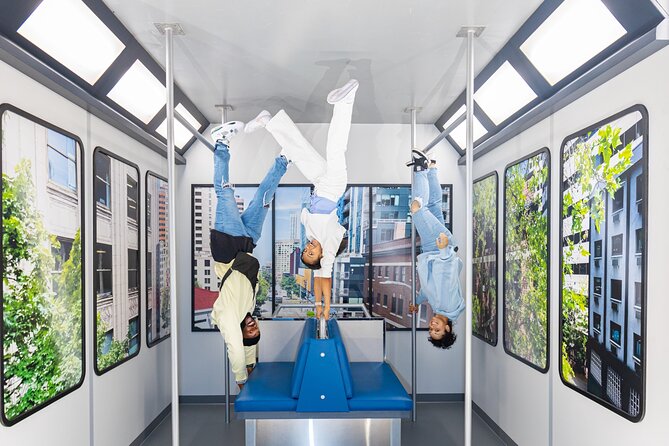
This is not a quiet gallery. The Museum of Illusions Seattle is built for motion, reactions, and those small moments where you stop trusting your own senses. The big idea is simple: your brain interprets reality in real time, and optical illusions show you the shortcuts it takes.
What makes it appealing is the mix of visual and sensory elements. The museum is described as educational, but it does not feel like a classroom. It feels more like a series of experiments you run on yourself, with the payoff being that you walk out thinking, Wow, my perception is not as automatic as I assumed.
You will find illusions that go beyond flat tricks. The setup includes illusion rooms and installations, plus holograms that can change how depth, scale, and motion feel. If you enjoy goofy, science-y challenges and want to try things with your own body, this place plays right into that.
More museums and passes around Seattle
Your ticket, time window, and how to plan the visit
Admission runs $41 per person, and the visit duration is listed as roughly 1 minute to 1 hour 30 minutes. That wide range is a hint: you control the pace. If you rush, you can skim a lot quickly. If you pause for interaction, photos, and repeats, you can easily end up at the longer end.
On average, this gets booked about 6 days in advance, so I would not treat it like a same-day gamble during busy periods. You also get confirmation at booking, and the ticket is delivered as a mobile ticket, which helps if you hate printing and love saving time.
One more planning detail: the experience notes a good weather requirement. That seems odd for an indoor museum, but it is stated as a condition for the booking. If the day turns rough and the visit is canceled due to weather, you are offered a different date or a full refund. It is worth keeping that in mind if your schedule is tight.
Inside the illusion rooms: what you’ll actually do
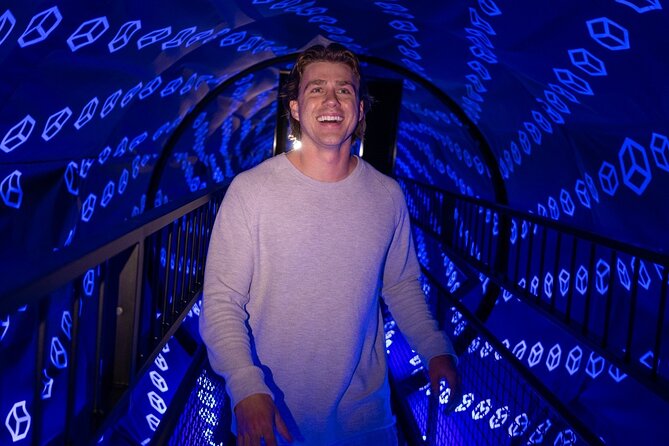
The museum experience is built around exploring over 50 immersive, hands-on exhibits. “Hands-on” is the key phrase, because the value here comes from participation. You are meant to test what you see, then watch your interpretation change as you move around, look again, or interact with a setup.
The museum describes several categories of experiences. Here is what that means in plain terms for your visit:
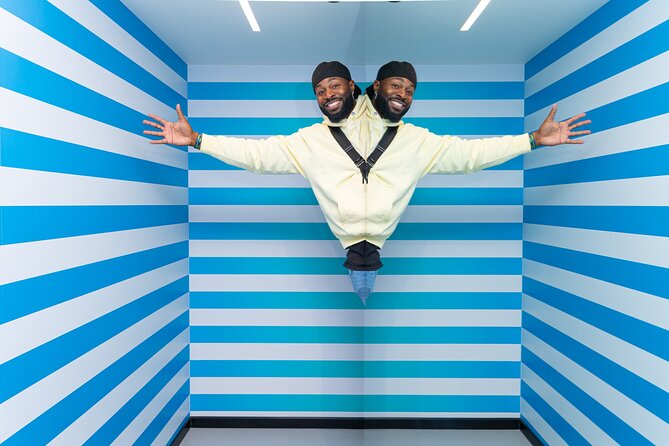
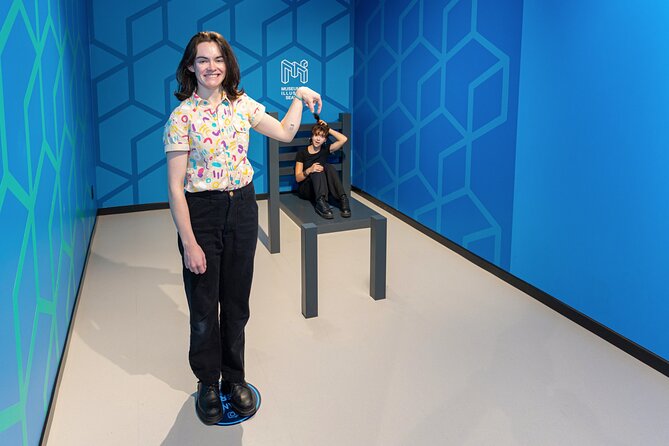
Illusion rooms. These are designed to trick your sense of scale, perspective, or movement. You can expect environments where the room itself feels like part of the illusion, so walking around matters.
Installations and holograms. The listing specifically calls out holograms, plus larger installations. These tend to create quick wow moments because they can make images look three-dimensional or create motion effects that your brain struggles to place correctly.
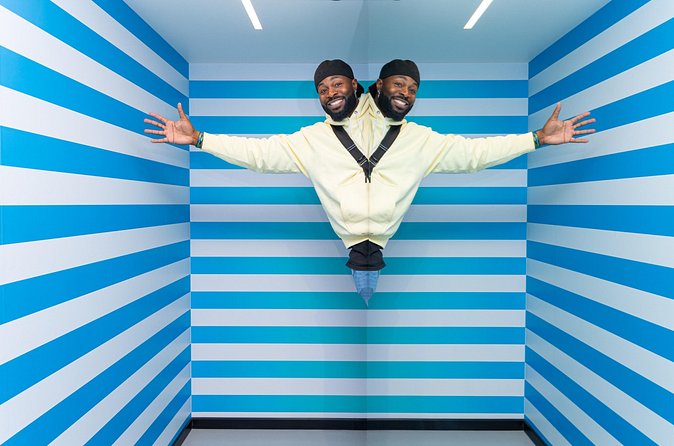
Gravity and body-scale moments. The examples include things like defying gravity and growing or shrinking your body. Even without details on each specific effect, the concept is consistent: you will use your own position and viewpoint to make the illusion believable.
Life-size trick viewing. One example given is a walk-in, life-size kaleidoscope. That type of attraction usually works best when you slow down for a minute and let your brain reset, because the magic is in the change in pattern as you move.
All of this is framed as science behind optical illusions. That does not mean you need to study anything. It means the museum is focused on mechanisms, not just visual tricks for their own sake. You can leave with a better understanding of how perception works, even if you mainly came for fun.
How long should you plan for, and why some visits feel short
You might spend anywhere from a few minutes to about 1 hour 30 minutes, depending on your pace. That flexibility is great if you want a quick stop. It can be frustrating if you expect a full, meaty attraction day.
The mixed feedback you should take seriously is value-related. Some people have felt the experience did not have enough “activities to choose from” and that it was too short for the ticket price. That does not automatically mean it is disappointing. It does mean you should treat this as a focused, interactive stop, not an all-day museum.
Here is how I suggest you plan to avoid the “too short” feeling:
- Aim for the longer end of the duration if you like experimenting rather than rushing.
- Give yourself time to repeat the most confusing exhibits. Optical illusions often land harder the second or third try.
- Think of it like a hands-on funhouse with a science lens. If you only want one or two quick snaps, you may feel you did not get enough out of it.
If you are traveling with people who do not like being active indoors, you might also want to keep the pace flexible. The museum works best when you are willing to move, look closely, and accept that your first interpretation might be wrong.
Price and value: is $41 worth it?

At $41 per person, the main question is whether this matches your style of fun. This museum is not positioned as a huge collection of varied exhibits across many floors with long time blocks. It is positioned as an interactive, illusion-heavy experience with a defined set of installations and rooms.
So who gets the best value?
- You want interactive, playful experiences where your body is part of the illusion.
- You enjoy learning by doing, even if the learning is subtle and comes packaged as entertainment.
- You are okay with spending time on fewer attractions, as long as the moments feel memorable.
Who should pause before buying?
- You strongly prefer long, multi-hour attractions with lots of distinct “things to do” that you can hop between.
- You need a slow, strolling museum vibe. This place is more active, and the time can end sooner than you expect.
- You want guaranteed, major wow moments every single minute. Some exhibits may work better for some people than others, because illusions depend on your viewing angle and attention.
Since the rating is 4.1 out of 9 with mixed written feedback, I recommend you treat this as a gamble only in the sense that perception-based fun can vary by person. Your best strategy is to go with the right expectations, and plan enough time to enjoy more than just the first few attractions.
Getting there and practical comfort: simple logistics that matter
Good news on logistics. The museum is near public transportation, so you are not stuck hunting for parking. That is a big deal in Seattle, where traffic and costs can make simple plans feel complicated.
You also have the comfort note that service animals are allowed, and most travelers can participate. That suggests the museum is not extremely restrictive in how you experience it, though you should still keep your own comfort and mobility needs in mind.
If you are sensitive to bright lights or lots of visual motion effects, consider arriving ready to take breaks. The museum is built around visual tricks, which can be mentally stimulating. A short pause can help you reset your eyes and actually make the illusions work better.
Other Seattle tickets you can hold on your phone
- Seattle: Space Needle & Chihuly Garden and Glass Ticket★ 4.7 · 1,890 reviews
- Skip the Line: Daily Admission at Woodland Park Zoo Ticket★ 4.5 · 136 reviews
- Chihuly Garden and Glass in Seattle Ticket★ 5.0 · 133 reviews
Should you book this Museum of Illusions Seattle ticket
Book it if you want a compact, interactive stop in Seattle where you will participate, not just observe. If you love optical illusions, hands-on experiments, and those moments where you laugh at how easily your brain gets fooled, this is right up your alley.
Skip or reconsider if you are buying for a long, deep museum day. The timing range and the price point create a real expectation issue for people who want a lot of variety or a longer session. If that is you, you may feel shortchanged unless you plan to stay for the longer part of the visit window and savor the exhibits instead of sprinting through.
If you can, plan ahead and choose a time when you will have energy to interact. This is one of those experiences where engagement matters, and rushing is the enemy of “wait, that really tricked me.”
FAQ

How much is the Museum of Illusions Seattle admission ticket?
The admission ticket costs $41.00 per person.
How long does the experience last?
The experience duration is approximately 1 minute to 1 hour 30 minutes.
Is the ticket mobile, or do I need to print it?
The ticket is provided as a mobile ticket.
When will I receive confirmation after booking?
Confirmation is received at the time of booking.
Is the attraction near public transportation?
Yes, it is near public transportation.
Are service animals allowed?
Yes, service animals are allowed.
Can most travelers participate?
Yes, most travelers can participate.
How far in advance is this typically booked?
On average, it is booked 6 days in advance.
What is the cancellation policy?
The experience is non-refundable and cannot be changed for any reason.
What happens if the experience is canceled due to poor weather?
If it is canceled due to poor weather, you will be offered a different date or a full refund.
More Seattle Tickets


More Tour Reviews in Seattle




More Museums and Passes

Newest on the Seattle desk
- Seattle: Twilight Tour and Olympic National Park
★ 5.0 · 3 reviews - Where the Hops Grow! Yakima Brewery Tour
★ 5.0 · 3 reviews - Forks Town, Twilight Movie, Olympic Small Group 1 Day Tour
★ 5.0 · 3 reviews - Tacoma & Gig Harbor Hotel Transportation To/From Seattle Airport
★ 5.0 · 3 reviews - Awesome Scavenger Hunt: Seattle By The Sound
★ 3.5 · 3 reviews
Seattle Museums & Attraction Tickets, side by side.
 ★ 4.6Seattle CityPASS®: Save up to 46% at 5 Top AttractionsFrom $129742 reviews
 ★ 5.0The Museum of Flight Entrance TicketFrom $29477 reviews
 ★ 4.8Chihuly Garden and Glass Entry TicketFrom $45374 reviews
 ★ 3.0Sky View Observatory at the Columbia Center Admission TicketsFrom $28189 reviews
 ★ 4.5Skip the Line: Daily Admission at Woodland Park Zoo TicketFrom $23136 reviews
 ★ 4.0Smith Tower Observatory Admission TicketFrom $22119 reviews
 ★ 4.8Seattle Art Museum Admission TicketFrom $2967 reviews
 ★ 4.6The Museum of Flight Entry TicketFrom $2924 reviews
Seattle pages with this tour