
REVIEW · MOUNT RAINIER NATIONAL PARK TOURS
Mount Rainier: Day Hike on the Mountain
Three Burroughs turns one day into peak-level views. I love how the hike runs from the Sunrise Visitor Center into open ridges and meadows, so you keep earning better angles on Mount Rainier while you move. I also like that it is a small group format, which matters because you are hiking at altitude and the guide can help you pace and adjust if you need to. The main drawback is the altitude and uneven trail, including possible snow, so it is not a casual stroll even though the route is not technical.
You will spend your day chasing three things at once: scenery, wildlife chances, and a real human pause for lunch where climbers are visible on clear days. The drive, the time on foot, and the provided gear all make this a strong choice if you want a guided hiking day without doing the logistics yourself.
Key highlights worth putting on your radar
- Three Burroughs views: strong sightlines on Rainier, plus Glacier Peak and Mount Baker on a clear day
- Goat spotting in meadows: look for resident mountain goats grazing around the Frozen Lake area and beyond
- A real hike, not just pull-offs: plan for about 4 plus hours total, including meals and breaks
- Snowfields without climbing skills: two snowfield crossings, still non-technical and doable with trekking poles
- Lunch with climber watching: a provided break that keeps the whole day feeling “on the mountain”
- Guide-led pacing and options: you can turn back at 4, 6, or 9 miles depending on how you feel
Why the Three Burroughs Trail delivers serious Mount Rainier views
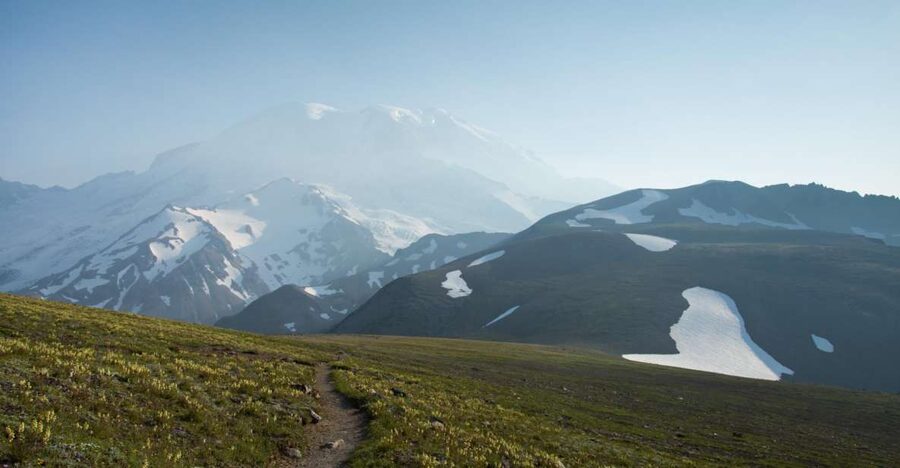
If Mount Rainier is on your list, this kind of trail is the reason. The Three Burroughs route is built around elevation gains and panoramic openings, so you are not stuck staring at the same slope for hours. From the start area at Sunrise, you climb quickly to a ridge, and on clear days that ridge can give you views of Glacier Peak and Mount Baker. That is a fun bonus because it frames Rainier as part of a larger volcano skyline rather than a single isolated peak.
Then the trail keeps working its way toward the Second Burroughs, where Rainier shows up in front of you in full presence. This is the part you remember later, because the approach feels like you are walking toward a reveal. Add in the meadows and the Frozen Lake area, and you get that extra spark: wildlife chances and a sense of the mountain as an active place, not just a backdrop.
I also like the vibe that the day is designed around movement, not sightseeing by car. Even with a pickup and transport, you still get real hiking time on a 6 plus mile day, which is exactly what many people want when they pay for a Mount Rainier hiking experience.
Other routes to the mountain, compared
Getting to Sunrise Visitor Center from Seattle, minus the stress
This tour is designed for people who want the mountain day but do not want to plan the whole routing. You get pickup from your Seattle-area accommodation. Pickup is generally between 6 AM and 8 AM, and the scenic drive to Mount Rainier takes about two hours.
That early departure matters. Sunrise area timing is about more than comfort. You are hiking at higher elevation, and weather can change fast. Earlier starts give you a better chance of clear visibility, especially for those volcano views like Glacier Peak and Mount Baker that show up on clear days.
There is also a small local café stop after you hike and decompress a bit, then you head back to Seattle. It is a good buffer because the day is structured, not rushed. You finish feeling like you did a hike, not just a series of parking-lot moments.
The hike itself: ridge climbing, Frozen Lake, and mountain goat meadows
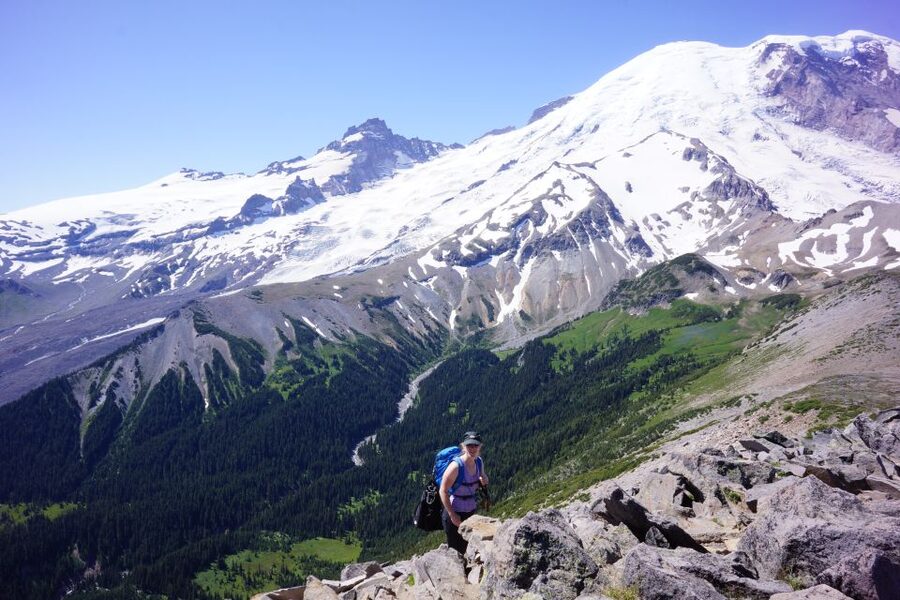
Right away, the trail starts with a climb. It is not technical, but it is uneven, and you should expect a workout. The route begins from the Sunrise Visitor Center and rises quickly to a ridge. This is where you start stacking the best views early, so you get rewarded for effort without waiting hours for something to happen.
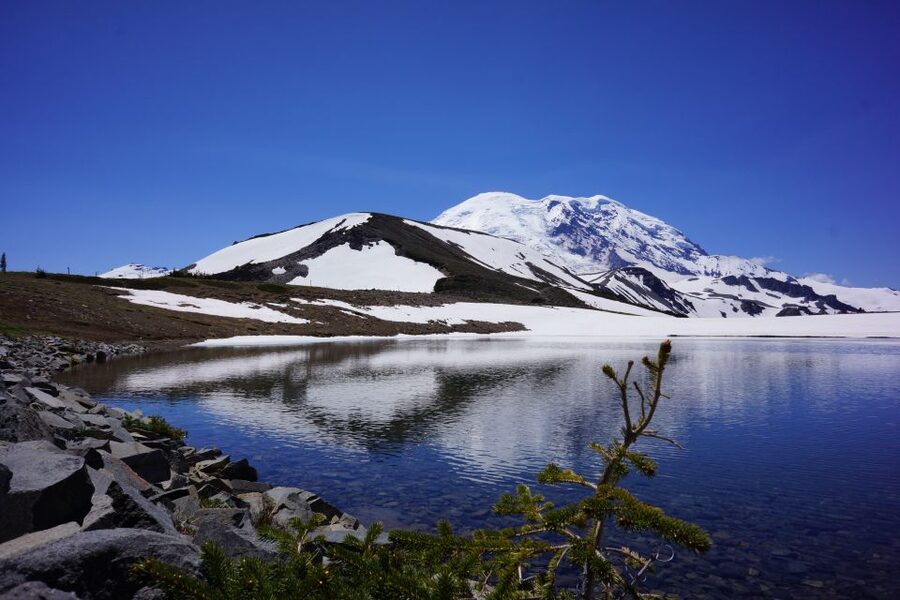
As you continue, you pass Frozen Lake. Even if the lake itself is not your main target, the whole area is part of the scenery engine. It is also where you can focus on wildlife. The tour is specifically built around the chance of seeing resident mountain goats grazing in mountain meadows above and below the trail.
A practical mindset helps here. Goats often look relaxed, but they can move fast when they decide to. If you want the best chance, keep your eyes up and your breaks brief, then resume walking. The guide’s job is partly to point things out, but you are also in charge of spotting, because the animals are smaller than your brain wants them to be.
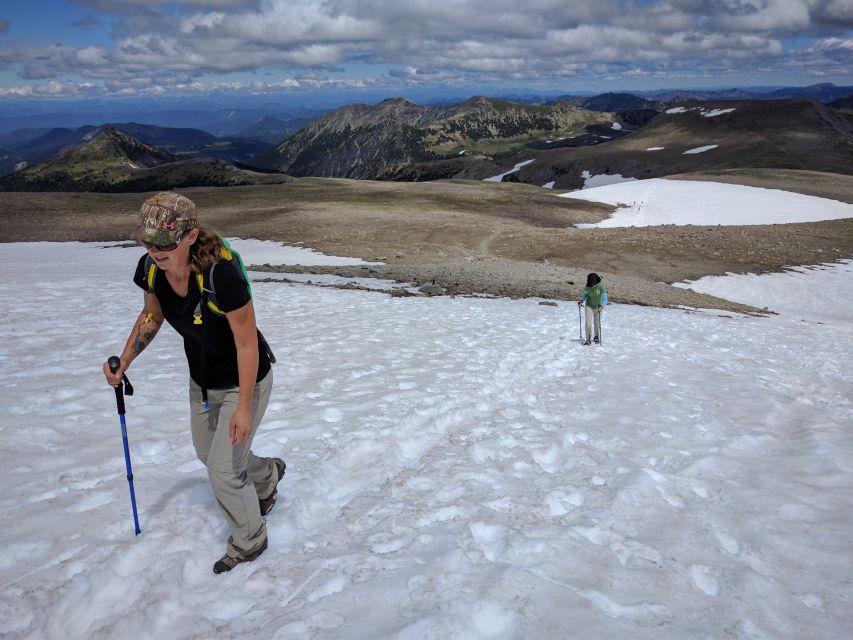
The trail continues up across two snowfields to the Second Burroughs. This is still a non-technical hike, meaning no climbing skills are required. Still, treat snow on uneven ground as real footing challenges. Trekking poles help a lot, and they are included, so you are not forced to rent gear last minute.
If you are thinking about your own pace, here is an important built-in safety valve: you can turn back at 4, 6, or 9 miles depending on how you feel. That flexibility is a gift on a day where altitude can hit different people in different ways.
Second Burroughs, lunch time, and watching climbers on the peak
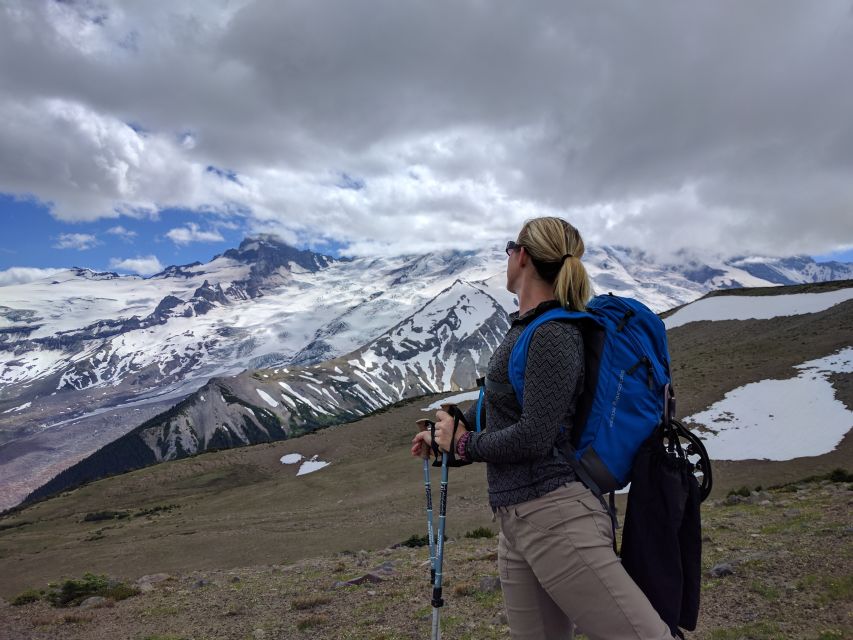
Second Burroughs is where the whole day clicks into place. As you reach it, Mount Rainier appears in front of you, and the view becomes the main character. This is the payoff for the earlier climbing, and it is the moment you can slow down without feeling like you are wasting time.
Lunch is where the tour becomes more than just walking. You get a provided break for about 45 minutes, and it is timed so you can enjoy the scenery while you eat. This matters because at elevation, you do not want to just grab food and rush on. A calm pause helps you reset, and your body appreciates it too.
There is also a very specific kind of excitement here: you can watch for mountain climbers on the peak while you picnic. That is one of those details that turns a view into a story. Even if you are not climbing, it makes you feel connected to what people are doing up on Rainier’s routes.
If the weather is clear, you also get the best context for distant volcano views. That is the combo you are chasing all day: close-up wonder in front of you, and a bigger Washington picture in the distance.
How hard is it really, altitude included at around 6,500 feet
The hike sits at roughly 6,500 feet and is described as not for the faint of heart. That does not mean it is mountain climbing. It means you should respect the day like it is a real hike, not a fitness class.
Here is what you can expect to manage:
- Uneven trail surfaces
- Possible snow cover
- Altitude effects, which can be sneaky even if you are in decent shape
- The need for close-toed shoes and layered warmth
The route is not technical and does not require special climbing skills. But your body still has to move efficiently on uneven ground, sometimes with snow underfoot. Trekking poles are included, and they make a difference. I like that the tour gives you that support upfront rather than making you figure it out yourself.
Not suitable for everyone. It is not designed for children under 12, people with mobility impairments, or people with heart problems. If you are on the fence because of health concerns, the safest move is to talk to a medical professional before committing. Altitude is a factor, and the tour is not aiming to be gentle.
What to bring is simple and very specific:
- Comfortable close-toed shoes
- Warm, layered clothing
- Hat, gloves, and a base layer
- Fleece or down coat
- Windbreaker or raincoat
- Sunglasses
Warm layers are non-negotiable. Sunrise area weather can feel different from Seattle fast, even on a day that looks promising.
Guide quality and small-group value for $269 per person
At $269 per person for a one-day trip, the price only feels fair if you understand what is included. This is not just a bus to a trailhead. You get transportation from accommodations in the Seattle area and around the Mount Rainier North side or Sunrise side, park entrance fees, and hiking equipment such as trekking poles and backpacks. You also get a guide, plus lunch and snacks.
That is the value equation: you are paying for time saved, equipment provided, and expert help on the mountain. And with a small group limited to 5 participants, the day stays personal. The guide can adjust pacing and make turn-back decisions feel less like a gamble.
The guide impact shows up in the details. I love that names like Josh and Sophia come up in the experience reports, because it suggests you are getting a real person leading the hike, not a generic checklist. Josh is described as very friendly and knowledgeable about flora, fauna, and landscapes, plus he photographs the hike and shares the photos after. That is a practical bonus. You get to enjoy the hike without trying to stop and pose every two minutes, then you still get images to remember it later.
The logistics also sound smooth. Pickup and drop-off run like they mean it, and the hike itself is manageable enough that groups can find a great lunch lookout. One standout perk: flexibility to stop by the roadside to look at wildlife like elk, which is the kind of small detour that turns a ride into part of the story.
If you are traveling solo or with friends and you do not want to handle gear, trail timing, and altitude pacing on your own, this is where the price makes sense. If you already have your own gear, a car, and the confidence to handle trail conditions, you could do it independently. But you would be giving up the guided pacing, equipment support, and the group’s built-in structure.
More trails within an hour of Seattle
- Guided forest hike to Seattle waterfalls incl. Snoqualmie Falls★ 5.0 · 589 reviews
- Visit Snoqualmie and Hike to Twin Falls (Transportation included)★ 5.0 · 330 reviews
- From Seattle: Pacific Northwest Waterfalls & Hiking Tour★ 4.6 · 131 reviews
Should you book the Mount Rainier Three Burroughs day hike?
Book this if you want a guided Mount Rainier day that is heavy on hiking time and big on views. You are the right fit if:
- You want to hike around 4 plus hours total and cover about 6 plus miles
- You care about seeing Rainier from key angles, especially near Second Burroughs
- You want a real wildlife chance for mountain goats in meadows around Frozen Lake
- You like the idea of a provided lunch with a view, plus the possibility of spotting climbers
- You prefer small-group pacing that can adapt, including turn-back options at 4, 6, or 9 miles
Skip it, or at least reconsider, if you:
- Are sensitive to altitude or have health concerns such as heart problems
- Need a fully accessible route, because the trail is uneven and may include snow
- Want a short, low-effort nature walk, because this is a real uphill day
My honest take: this is a strong choice for people who want a one-day “Mount Rainier hit” that feels like a mountain day, not a viewpoint tour. If you dress for cold, respect uneven ground, and keep your expectations on the hiking side, you will likely love how much the Three Burroughs trail gives you.
FAQ
What is the duration of this Mount Rainier day hike?
The activity lasts 1 day, with a hiking portion spread across the morning and afternoon plus a lunch break.
How long is the hiking portion?
The day is structured with about 2 hours of hiking, a lunch break, and then about 2 more hours of hiking, so plan on a hike that is more than just a quick out-and-back.
Is the Three Burroughs hike technical?
No special climbing skills are required. The trail is not technical, but it is uneven and may include snow.
What kind of group size is it?
It is a small group limited to 5 participants.
What gear is provided, and what should I bring?
Trekking poles and backpacks are included. You should bring comfortable shoes, warm clothing in layers, and sunglasses.
Are pets allowed?
No, pets are not allowed on this activity.
More Trails Near Seattle
More Tour Reviews in Seattle


More Mountain Days
Newest on the Seattle desk
- Seattle: Twilight Tour and Olympic National Park
★ 5.0 · 3 reviews - Where the Hops Grow! Yakima Brewery Tour
★ 5.0 · 3 reviews - Forks Town, Twilight Movie, Olympic Small Group 1 Day Tour
★ 5.0 · 3 reviews - Tacoma & Gig Harbor Hotel Transportation To/From Seattle Airport
★ 5.0 · 3 reviews - Awesome Scavenger Hunt: Seattle By The Sound
★ 3.5 · 3 reviews
Mount Rainier National Park Tours, side by side.
 ★ 5.0Mt. Rainier National Park Highlights TourFrom $1503,156 reviews
 ★ 5.0Best of Mount Rainier National Park from Seattle: All-Inclusive Small-Group TourFrom $344805 reviews
 ★ 5.0Mt Rainier National Park Small Group Day Tour from Seattle 2CanGoFrom $148641 reviews
 ★ 5.0Mt. Rainier highlights – old forest, falls and glaciersFrom $179564 reviews
 ★ 4.8From Seattle: Mount Rainier National Park Guided TourFrom $173412 reviews
 ★ 4.7From Seattle: Mount Rainier Guided Day TourFrom $148233 reviews
 ★ 4.0Mount Rainier National Park Day Tour from SeattleFrom $148199 reviews
 ★ 5.0Mount Rainier Customized Tour from SeattleFrom $195113 reviews
Seattle pages with this tour